The API Economy: How Businesses Are Built on Other Businesses
Why composable APIs are the operating logic of modern digital products.
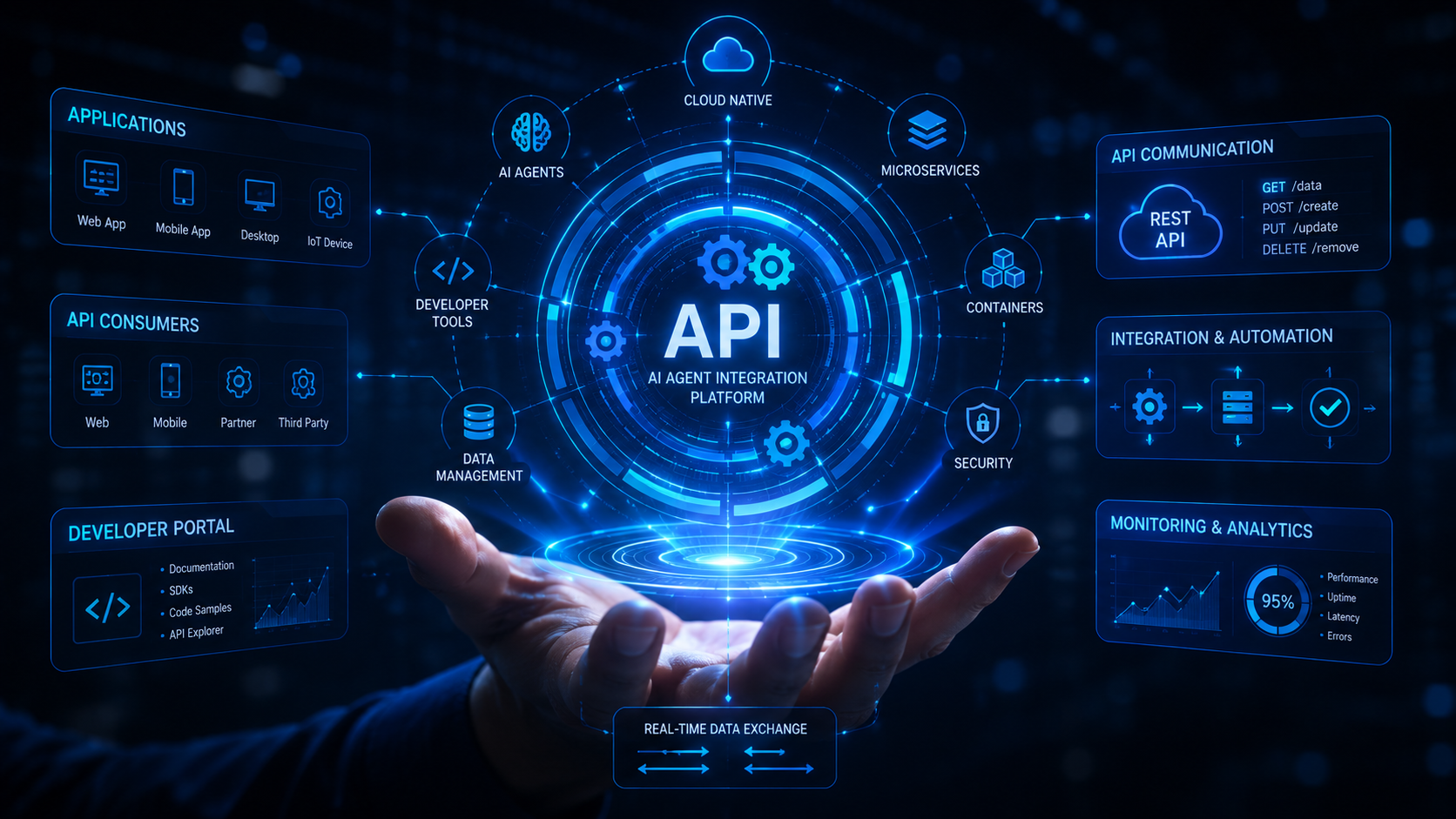
Every time you book a cab, the map is provided by Google. The payment is processed by Razorpay or Stripe. The SMS confirmation comes through Twilio or AWS SNS. The fraud check runs on a specialised risk platform. The driver background check pulls from a thirdparty verification service.
The cab company built a cab company. It did not build mapping, payments, SMS, fraud detection, or background verification. It assembled these capabilities from APIs, and focused its engineering on the problems that are actually its core business: matching drivers with riders efficiently and building a great user experience.
This is the API economy. The idea that digital capabilities can be packaged, published, and consumed as services, allowing businesses to compose sophisticated products from building blocks without building every capability from scratch.
What an API Is (and Why It Matters)
An Application Programming Interface (API) is a defined interface through which software systems communicate. It specifies what requests can be made, in what format, and what responses to expect. An API is a contract, both parties (the provider and the consumer) agree to the terms of the interface, enabling either to change their internal implementation without breaking the other.
The proliferation of well-designed, reliable public APIs, particularly web APIs using the REST or GraphQL conventions, has transformed software economics. Capabilities that previously required months of development are now available as API calls that take hours to integrate.
The Scale of the API Economy
The numbers illustrate how foundational APIs have become:
- 01Twilio processes billions of communications (SMS, voice, email) per day through its API
- 02Stripe processes hundreds of billions of dollars in payments annually through its API
- 03AWS offers thousands of services, all accessible through APIs
- 01The average enterprise application uses dozens of third-party APIs
- 02Public API directories list hundreds of thousands of available APIs
The Apigee (Google) analysis found that the majority of the top global enterprises now derive significant revenue from or operate critical functions through APIs, either as providers, consumers, or both.
API Business Models
The API economy has produced several distinct business models:
- 01API as the product: Companies whose entire business is the API. Twilio, Stripe, SendGrid, Plaid, Mapbox, these companies sell developer access to capabilities. Their customers are software developers and engineering teams. Their distribution is through documentation, SDKs, and developer communities.
- 02API as a channel: Companies that expose their product's capabilities through APIs to enable partner integrations. A bank that provides APIs to third-party fintechs is using APIs as a distribution channel, reaching customers through other businesses' interfaces.
- 03Internal APIs as platform: Large organisations that build internal API platforms to enable different teams to build on shared capabilities. Rather than every team building its own authentication, notification, or data access infrastructure, shared internal APIs make these capabilities available as internal services.
- 04Open banking and regulated APIs: Mandated API frameworks where regulators require incumbents to expose capabilities to third parties. India's Account Aggregator framework, the UK's Open Banking standard, and the EU's PSD2 directive are examples, APIs as regulatory instrument.
India's API Infrastructure
India has built some of the world's most impactful API infrastructure through the India Stack initiative:
- 01Aadhaar APIs: Identity verification through the world's largest biometric database. KYC for financial services, government services, and any application requiring verified identity.
- 02UPI APIs: The Unified Payments Interface exposes payment capabilities through APIs to banks, payment apps, and merchants. Any business can initiate and receive payments by integrating UPI APIs, a democratising infrastructure that enabled the fintech explosion.
- 01DigiLocker APIs: Access to verified government documents, driving licences, educational certificates, insurance policies, through APIs, enabling documentbased verification without physical documents.
- 02Account Aggregator APIs: The AA framework exposes financial data APIs, allowing customers to share their financial records across institutions through a standardised, consent-governed interface.
- 03ABDM APIs: The Ayushman Bharat Digital Mission exposes health data APIs, enabling health information exchange between providers, patients, and health applications.
This public API infrastructure is extraordinary in its scope and has enabled an entire generation of Indian fintech, healthtech, and govtech companies that are built on it.
The Developer Experience Imperative
In the API economy, developer experience (DX) is a competitive moat. APIs with excellent documentation, clear error messages, well-designed SDKs, generous sandbox environments, and fast support win developers' loyalty, and developers' loyalty means adoption.
Stripe's API documentation is legendarily good, clear, complete, with working code examples in a dozen languages, interactive API explorers, and comprehensive guides for every use case. This documentation quality was a significant factor in Stripe becoming the dominant payment API despite entering a market with established players.
The lesson: in the API economy, the quality of the developer experience is a product dimension as important as the technical capability of the API itself.
APIs and Security
The API economy creates specific security challenges:
- 01Authentication and authorisation: APIs must authenticate callers and authorise them only for what they are permitted to do. OAuth 2.0 and OpenID Connect are the standard protocols; API keys are simpler but carry risks if not managed carefully (key rotation, scope limitation, leakage prevention).
- 02Rate limiting and abuse prevention: Public APIs are exposed to the internet and must protect against abuse, excessive usage, scraping, DDoS, and bot traffic. Rate limiting, quota management, and anomaly detection are standard API management capabilities.
- 03Input validation: APIs that accept data from third parties must validate that data rigorously, SQL injection, XSS, and other injection attacks can be delivered through API parameters as easily as through web forms.
- 01Data exposure: APIs designed for one purpose can inadvertently expose more data than intended, returning full objects when only specific fields are needed, or returning data about other users due to broken authorisation logic. OWASP's API Security Top 10 is the standard reference for API-specific vulnerabilities.
- 02Third-party API risk: Every third-party API your application depends on is a supply chain risk. If Stripe has an outage, your payments stop. If an API provider is compromised, your customers' data may be exposed through that vector.
APIs and the DPDP Act
The API economy creates specific data protection considerations under the DPDP Act:
- 01Consent for API-based data sharing: When your application uses an API that accesses personal data on your users' behalf, a bank account API, a health record API, a contact import API, you need valid consent from the user for that specific data sharing purpose. The Account Aggregator framework handles this through its consent artefact model; other API integrations may require explicit consent capture.
- 02Data processor relationships: Third-party APIs that process personal data on your behalf are data processors under the DPDP Act. Data processing agreements covering the processing purpose, security standards, breach notification, and deletion requirements must be in place.
- 03API audit trails: For data protection compliance, you need to be able to demonstrate what data was shared through which API, when, for what purpose, and with which third parties. API gateway logging provides this, but it must be configured and retained appropriately.
Building an API Strategy
For organisations that have not yet developed a deliberate API strategy, the areas to address:
- 01As an API consumer: Inventory your API dependencies, understand the data and risk exposure each creates, implement appropriate security controls (credential management, input validation, rate handling), and have contingency plans for API provider outages.
- 02As an API producer: Invest in developer experience, documentation, SDKs, sandbox environments. Design APIs with security from the start. Implement API management infrastructure. Build a developer community and support model.
- 03As both: Establish an internal API platform that serves internal teams as first-class customers, creating the organisational capability and discipline for external API provision.
At ASCENRA Technologies, our products have API-first by design, enabling integration with any touchpoint, any system, and any downstream processing service through a welldocumented, secure, and reliable API layer. This is the architecture that makes us practical at scale.
Note: This article is for informational purposes only. Technology capabilities and regulatory requirements described may have changed since publication.