How Generative AI Is Changing Software Development
Where AI accelerates engineering, and where over-reliance quietly introduces risk.
Software development has always evolved through waves of abstraction. Assembly gave way to high-level languages. Structured programming gave way to object-oriented design. Monoliths gave way to microservices. Each wave changed what developers spent their time on, and raised the floor for what a small team could build.
Generative AI is the latest wave. But unlike previous ones, it does not just change how code is written, it changes who writes it, how fast, and increasingly, what gets written at all. The implications for engineering teams, product organisations, and technology businesses are profound and still unfolding.
What Generative AI Actually Does in a Development Context
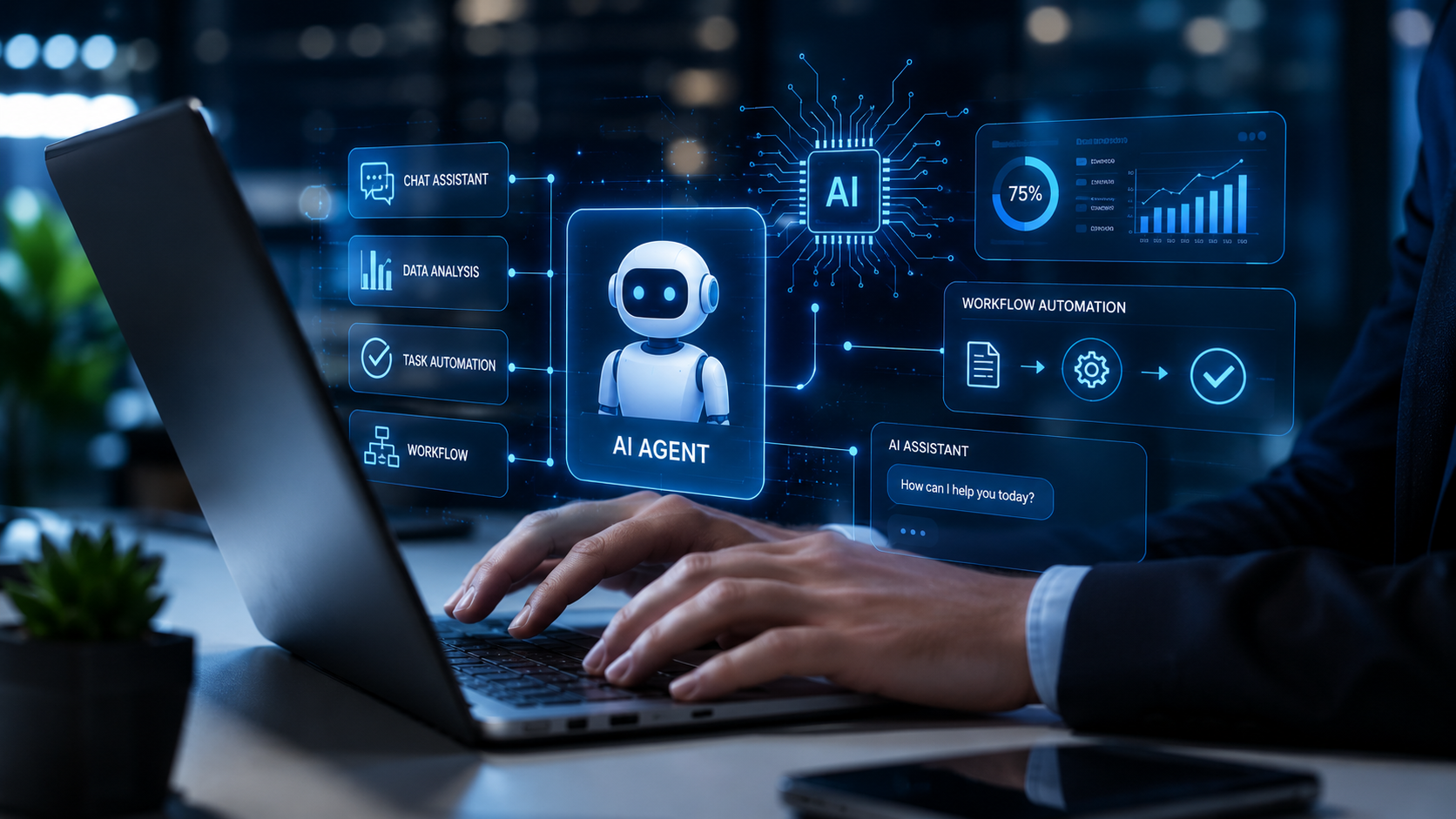
Generative AI tools for software development, GitHub Copilot, Cursor, Amazon CodeWhisperer, Google Gemini Code Assist, and a growing ecosystem of specialised tools, work by predicting and generating code based on context. They are trained on enormous volumes of public code, documentation, and natural language, and they use that training to suggest completions, generate functions, write tests, explain code, and translate between languages.
This is different from autocomplete or linting. A sophisticated AI coding assistant can:
- 01Generate an entire function from a natural language description
- 02Write unit tests for code it has never seen before
- 03Explain a complex legacy codebase in plain language
- 04Refactor code to a different pattern
- 05Translate code from one language to another
- 06Debug by identifying the probable source of an error from a stack trace
- 07Generate boilerplate, configuration files, and documentation
The current generation of tools is genuinely good at these tasks, not perfect, but good enough that developers who use them consistently report meaningful productivity improvements.
The Productivity Reality
The headline claims about productivity gains from AI coding tools vary widely. GitHub reported a 55% productivity increase in a controlled experiment; other studies have found more modest improvements, particularly for experienced developers on complex, novel problems. The honest picture is nuanced:
Where AI delivers the most value:
- 01Boilerplate code generation, CRUD operations, API endpoints, data models
- 02Test generation, unit tests for well-defined functions
- 03Language translation, converting Python logic to TypeScript, or SQL to ORM calls
- 04Documentation generation, docstrings, README files, inline comments
- 05Familiar territory, when the problem is similar to patterns the model has seen before
Where AI adds less value (and sometimes negative value):
- 01Novel architectural decisions that require deep context about a specific system
- 02Security-sensitive code that requires understanding of specific threat models
- 03Performance-critical code that requires hardware-level knowledge
- 04Highly domain-specific logic in areas underrepresented in training data
- 05Code that requires understanding of undocumented internal systems
The net effect is a meaningful acceleration in the routine and repetitive parts of software work, which, for most teams, represents a significant fraction of their time.
Beyond Autocomplete: AI in the Full Development Lifecycle
The most significant changes from generative AI in software development are not the individual code suggestions. They are the shifts happening across the full development lifecycle.
Requirements and specification: Natural language is increasingly a valid interface for specifying software. Teams are using AI to translate user stories into technical specifications, generate acceptance criteria, and identify edge cases that human teams miss. The gap between business requirements and technical implementation is narrowing.
Architecture and design: AI can evaluate architectural options, identify potential failure modes, and suggest patterns appropriate for specific use cases. This does not replace senior architectural judgement, but it gives junior teams access to pattern knowledge that previously required senior mentorship.
Code review: AI code review tools can identify common bugs, security vulnerabilities, style violations, and performance issues faster than human reviewers, and without the social dynamics that sometimes make human code review uncomfortable. They do not replace human review but change its focus toward higher-level concerns.
Testing: Test generation is one of the highest-value AI applications in software development. Tests are time-consuming to write, often deprioritised under time pressure, and enormously valuable for code quality. AI that generates meaningful tests from function signatures and docstrings removes one of the most common excuses for inadequate test coverage.
Documentation: Documentation is the most consistently neglected part of software development. AI that generates and updates documentation in sync with code changes removes a major maintenance burden and makes codebases significantly more accessible.
Deployment and operations: AI is increasingly embedded in infrastructure tooling, predicting the impact of configuration changes, generating deployment scripts, monitoring for anomalies, and suggesting rollback actions when deployments go wrong.
The Emerging Developer Experience
For individual developers, working with AI coding tools is changing the nature of the job in several ways:
The role shifts from typing to reviewing: Developers spend less time writing code from scratch and more time evaluating, modifying, and accepting AI-generated suggestions. This is a different cognitive mode, closer to technical editing than authorship.
Context curation becomes a key skill: AI tools perform best when given rich context, the surrounding codebase, the relevant documentation, the specific requirements. Developers who are good at providing this context get better results. Prompt engineering, adapted for code contexts, becomes a professional skill.
The "blank page" problem largely disappears: One of the most cognitively expensive moments in software development is starting, deciding how to structure a solution, what patterns to use, where to begin. AI tools eliminate most of this friction, generating a starting point that can be refined rather than a blank canvas.
Knowledge gaps close faster: A junior developer who does not know the idiomatic way to handle async operations in Rust no longer needs to search documentation for ten minutes. They ask the AI. This is democratising in the best sense, it raises the effective knowledge level of less experienced developers.
The Risks Nobody Talks About Enough
Generative AI in software development introduces risks that engineering leaders need to manage deliberately:
Hallucinated code: AI coding tools confidently generate incorrect code, incorrect logic, non-existent API calls, deprecated methods, plausible-looking but broken implementations. Developers who do not verify AI output carefully will ship bugs. The confidence of AI output does not correlate with its correctness.
Security vulnerabilities: Research has consistently shown that AI-generated code has higher rates of certain security vulnerabilities than experienced-human-written code. Code that looks right can embed injection vulnerabilities, improper authentication, insecure cryptographic implementations, and other security failures. AI-generated code needs careful security review, possibly more careful than human-written code.
Intellectual property uncertainty: AI models trained on public code may reproduce code that is under copyright or open-source licenses with attribution requirements. The legal landscape here is still evolving, but organisations need to understand what licenses govern the code their AI tools may generate.
Over-reliance and skill atrophy: Developers who rely heavily on AI for routine tasks may gradually lose proficiency at the underlying skills. This creates fragility, when the AI is wrong or unavailable, the developer lacks the baseline to detect or correct the error. Maintaining and developing fundamental skills alongside AI tool use is important.
Context leakage: Sending proprietary code to external AI services means that code may be used for model training or may be accessible to the service provider. Enterprise engineering teams need clear policies about what code can be sent to which AI services.
What This Means for Engineering Organisations
Hiring is changing: The value of raw coding speed is declining. The value of judgement, architectural thinking, problem decomposition, security awareness, domain expertise, is increasing. Hiring criteria need to reflect this.
Junior roles are changing most: The traditional path from junior developer (writing boilerplate, implementing well-specified tickets) to senior developer (designing systems, making architectural decisions) is being disrupted. Junior developers who effectively leverage AI can operate above their traditional level; organisations need new models for mentorship and career development.
Team structures will likely shrink and evolve. If each developer can produce more, smaller teams can accomplish more. But this also puts more pressure on the remaining team members, there are fewer people to spread context across, fewer people to catch mistakes, and more output to review.
Process needs to catch up: Most software development processes were designed for the pre-AI era. Code review, testing standards, security practices, and documentation requirements all need updating to account for AI-generated code in the workflow.
The Bigger Picture
Generative AI is not replacing software developers: It is changing what software development looks like, shifting the skill mix, the time allocation, and the ceiling on what small teams can build. The developers who thrive in this environment will be those who use AI as a force multiplier for their judgement and expertise, rather than a substitute for developing it.
For technology organisations, the strategic imperative is clear: understand these tools, adopt them thoughtfully, manage their risks deliberately, and build the practices that let your teams use them safely and effectively. The competitive gap between organisations that do this well and those that do not will be significant.
At ASCENRA Technologies, we build software platforms that incorporate these capabilities, using AI where it accelerates quality and productivity, and maintaining the human judgement and rigorous engineering practice that quality software requires.
Note: This article is for informational purposes only. Technology capabilities described are evolving rapidly; specific tool capabilities may have changed since publication.